The energy consumption of one high-performance industrial fan running is on the order of magnitude of that of many small, high-speed pedestal fans doing the same amount of air movement.
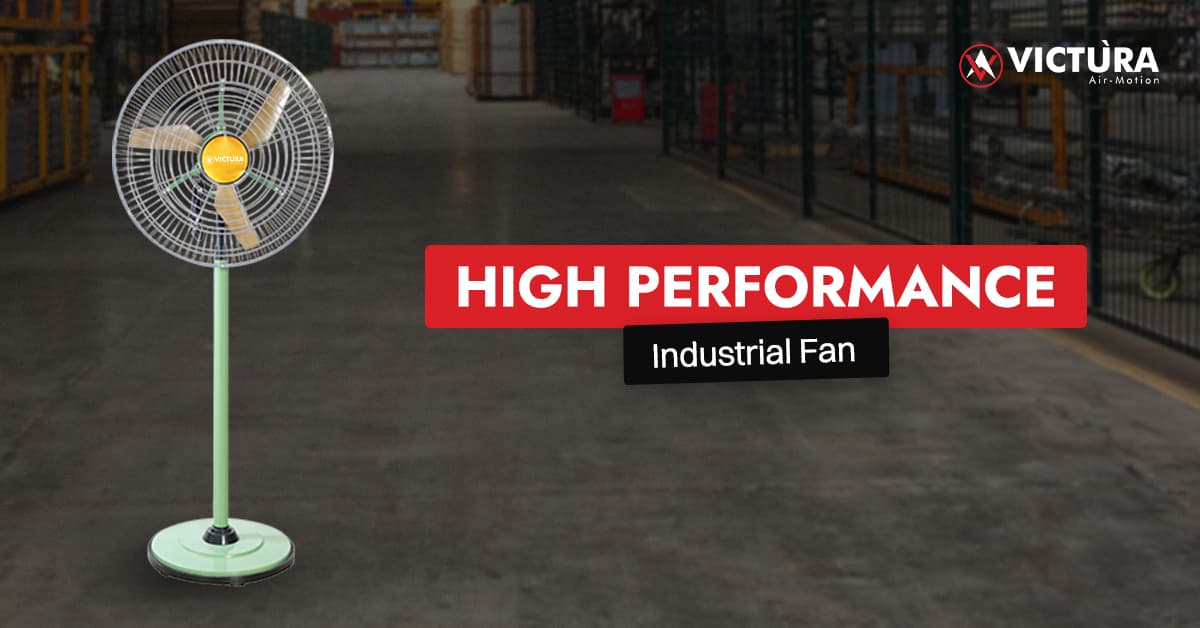
Picture a huge warehouse in midsummer. Hot, sticky air hangs without motion. Near the roof, heat builds fast. Regular coolers struggle here. Workers slow down. Power costs climb. Into this scene come large industrial fans. They handle enormous spaces that others cannot.
Not merely big versions of home fans. These shift wide, steady streams of air across floors and aisles. A change happens below. The atmosphere becomes bearable. Factories today rely on them. Not extras. Necessary tools. They balance airflow, cut risks, and help people work better.
Conventional fans often fail to perform properly in industrial environments as they produce little air flow but at a very high speed, thus leading to the formation of turbulent zones where fresh air is not met all over the room.
Industrial fans with high performance, however, work on another principle: displacement of air in huge quantities as per the laws of physics.
The airflow created by the fans, which is of a high volume but slow in speed, is a factor that will result in a comfortable, uniform and gentle breeze, thus allowing evaporative cooling in the environment. It will, therefore, be cooler for the workers than the actual ambient temperature.
In addition, these kinds of fans have blades that are up to 24 feet long which helps them to get rid of the "heat pockets" areas in a factory where air cannot circulate due to being trapped behind machines or racks, and thus, ensuring that every corner of the facility is livable.
Notably, in a time where energy prices are the most significant concern for the managers of the facilities, the high-performance fans are giving an overwhelming Return on Investment (ROI). It isn't like the HVAC (Heating, Ventilation, and Air Conditioning) systems will completely be taken out of the picture; they will be supported this way.
Air Conditioning (AC) of the management could be using a thermostat setting of the range 3–5°C upwards with the HVLS (High Volume, Low Speed) fan running without a loss of comfort being felt. The result of the adjustment is almost a reduction of cooling costs by 20–30%.
The energy consumption of one high-performance industrial fan running is on the order of magnitude of that of many small, high-speed pedestal fans doing the same amount of air movement. This is the reason for their having been made a keystone of every corporate sustainability plan.
These fans do more than just cool things down when it's hot. Winter brings a different issue in large warehouse spaces: uneven air distribution.
Warmth climbs upward since it weighs less than cooler air. So it gathers high above, stuck near the roof. That leaves workers on the ground feeling chilly while the heat sits unused overhead.
Warm air likes to gather near the roof. Some fans fix that by spinning slowly backward, or just creeping forward. They nudge heat downward where people are.
Temperature spreads more evenly across space. Heating units do not have to work so hard. One area does not feel like a sauna, while another stays cold.
The relationship between thermal comfort and productivity has been extensively studied. Research indicates that increasing the temperature to above 27°C results in a drop of cognitive ability and consequently the physical fatigue which in turn causes more mistakes and output to slow down.
The aspect of safety is also very important. In human climates, the still air causes the so-called "Sweating Slab Syndrome" phenomenon, where water vapour from the air gets condensed on the concrete walls and floors. This creates a very dangerous slip-and-fall situation not only for workers but also for forklifts.
High-output fans create and maintain a constant airflow that entirely eliminates the moisture buildup, thus keeping the floors dry and safe. When the employees' area of work is safe and comfortable, they feel prompted to work harder and the company upholds its reputation for employee retention and the bottom line.
Fumes, smoke, and smells tend to gather in factories where things are made. Even though venting moves most of it out, powerful fans keep air on the move, pushing it steadily toward exit paths. Without that flow, dirty air would just hang around too long.
When it comes to more than just clean air, these fans help guard what you own. Storing items like paper, wood, or food? Good airflow matters; it stops dampness that leads to mold.
Machines get a boost, too. Air moving steadily carries heat away from electronics. It also keeps metal parts drier, cutting down on rust where moisture builds up.
Fans meant for factories differ from those used in homes or offices. They last longer because they’re made tougher. Built using stuff like hardened aluminum, their strength comes from solid materials.
Motors inside deliver strong power while needing little upkeep over time. Dust in the air does not slow them down, nor do constant shakes from heavy machines nearby. Running nonstop is normal, day after day, without wearing out.
One big ceiling fan beats dozens of small ones when it comes to upkeep. Tangled wires become rare. Motor failures drop off. Checking each unit takes far less effort. Fewer parts mean smoother routines across wide spaces.
In the logistics and manufacturing sectors, where the stakes are high, temperature variations and energy costs are critical. The use of high-performance industrial fans provides a twofold advantage: they not only lower energy costs but also make the workplace, where your most important asset, your employees, safer and more comfortable.
These fans are the answer to the question of where to invest between huge bills and dead air, proving, as is sometimes the case, that the simplest solutions are also the most effective.
Do you want to change your facility’s climate and profit? Get Victura Airmotion fans now for a personalized airflow evaluation and find out what high-performance fan setup is appropriate for your warehouse. It’s time to clear the air and start saving!
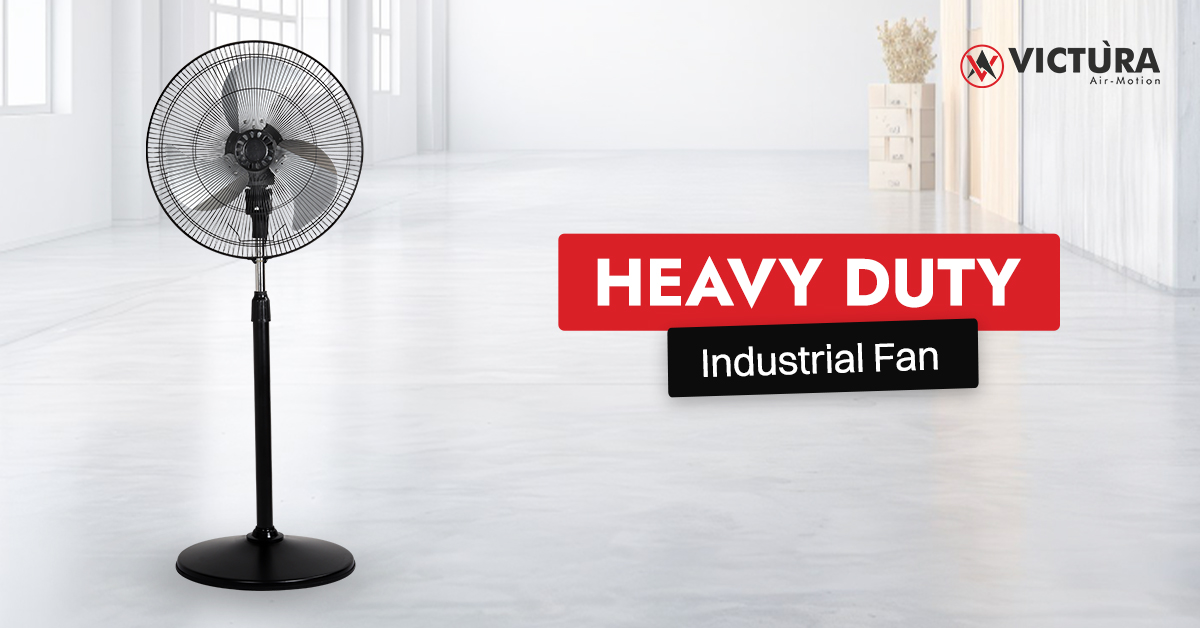
A typical warehouse relies on big, slow-turning ceiling fans known as HVLS models. These move massive amounts of air without rushing through it. For tighter spots where focused airflow matters more, you’ll often see sturdy drum or stand-mounted units doing the work instead.
Fresh air moves better when big fans spin slowly overhead. Worker comfort gets a boost without cranking up the AC. Energy bills dip because machines do less heating and cooling work. Moisture on floors fades as airflow stays steady through shifts. Sweating Slab Syndrome? Less likely each day.
Industrial models run nonstop, designed to handle constant operation. Tougher materials hold them together where regular ones would wear out fast. Instead of just cooling people nearby, they push massive amounts of air across wide spaces. Distance doesn’t slow them down like it does household types.
It's down to precision design, durable components such as treated aluminum, not just basic motors but advanced control systems, and also the sheer volume of air moved per cycle. Heavy-duty builds aren’t cheap to produce.
Moving air nonstop keeps areas from getting stuffy. Fumes find it harder to stick around when there's motion. Humidity gets swept along too. Exhaust vents get more cooperation from airflow as well.
When moving each cubic foot of air, these machines actually waste far less energy. A single powerful unit pulls fewer watts than several smaller ones trying to cool the same space.
Keep moving with bright ideas. From the way air moves to clever home hints, our blog is your place to dive into ease, style, and smart energy use.