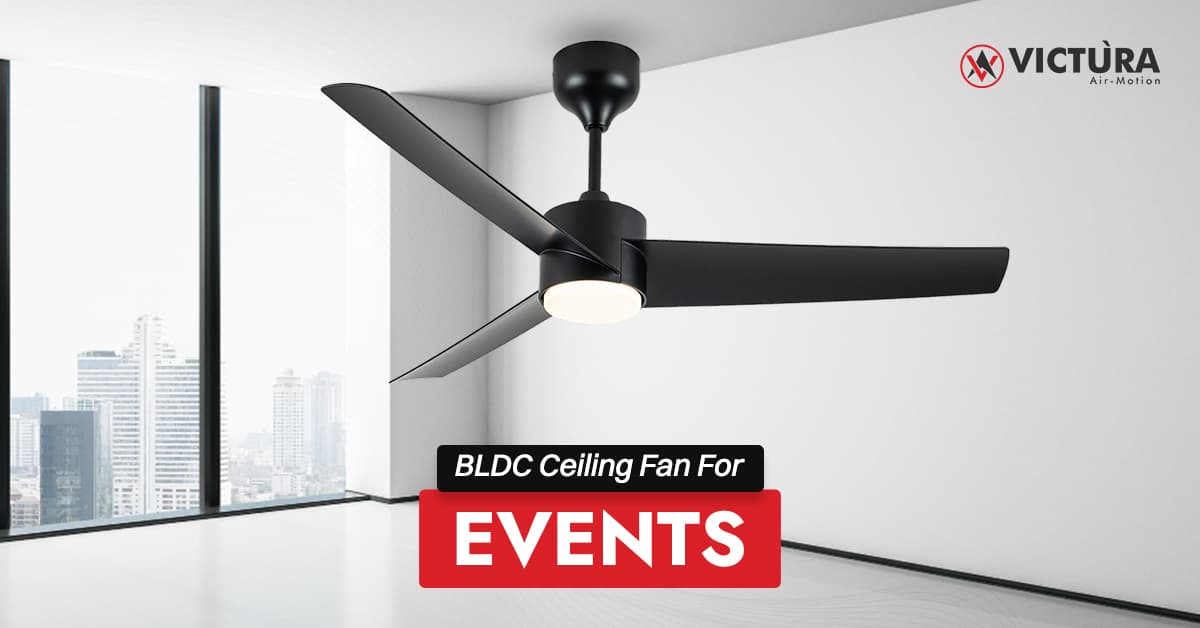
Let's be honest: for a long time, fans would blend into the room, functional but forgettable. But because BLDC motors are so compact, designers have finally been set free.
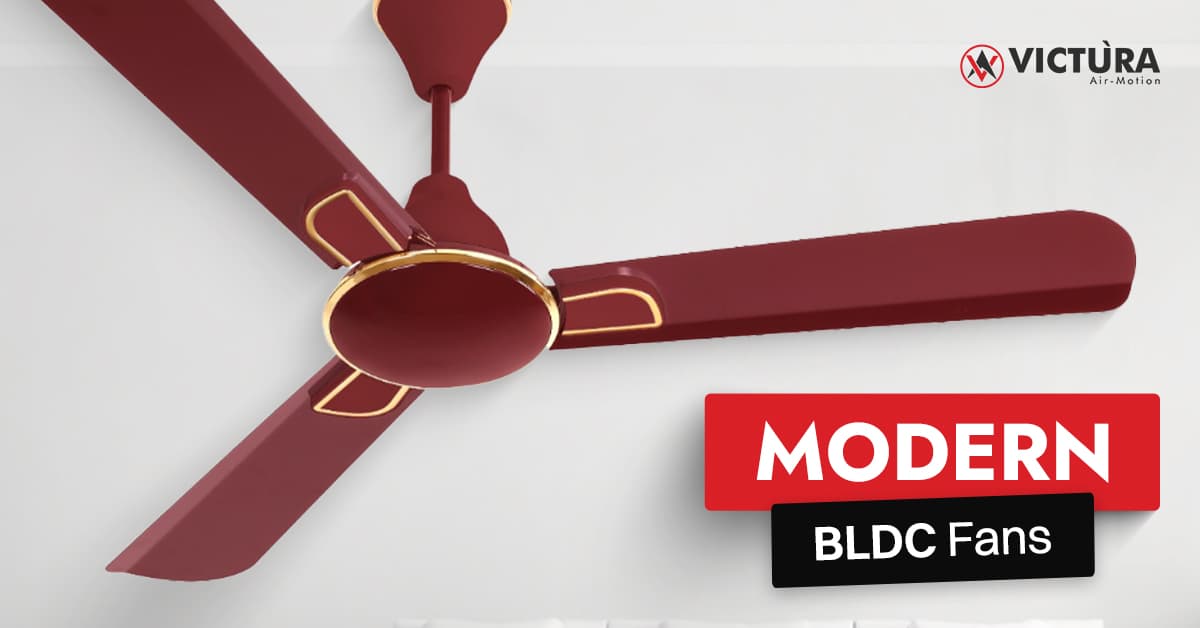
If you grew up in an Indian home, you know the rhythm of the afternoon. You’re lying on the cool floor, trying to nap, while the old fan above you performs a clunky percussion solo. It clicks, it wobbles, and it hums like an aging Ambassador car struggling up a hill.
For decades, we viewed the ceiling fan as a simple workhorse: a basic set of wings meant to battle the sweltering heat. But the wind is shifting.
A new technology called Brushless Direct Current, or BLDC, is turning that humble appliance into the most sophisticated resident of your ceiling. It’s no longer just about moving air; it’s about a total upgrade in how we live.
Think of a traditional fan motor like an old bicycle with a noisy, rusted chain. Inside, "brushes" are constantly rubbing against the motor to create motion. That friction is exactly what causes that annoying electrical "hum" that fills the silence of a midnight study session.
BLDC motors, however, are like an electric maglev train. They use magnets to glide through their rotation without any physical contact. The result is a whisper-quiet breeze. It’s a game-changer when you’re on a late-night video call or just trying to hear your own thoughts without a mechanical soundtrack.
In many Indian homes, the "tube light" is the king of chores, but it’s the enemy of relaxation. Modern BLDC fans are fixing this by acting like a Swiss Army knife for your ceiling. They come with integrated LED hubs that let you change the "flavor" of your room’s light.
The Productivity Spark: Switch to a crisp, cool white like a bright morning in the hills when you’re tackling homework or accounts.
The Evening Glow: Turn down the light to a mellow and warm golden amber color similar to the sunset at Marine Drive to ease your mind to sleep.
The Dimmer Switch: You are able to reduce the light so that it is only very slightly illuminated, like moonlight, which is ideal for a baby's room or a night light in the hallway.
Old fans are like sprinters that get exhausted and overheated; their motors bake from the inside out, leading to that inevitable "capacitor change" every few years.
BLDC motors are the marathon runners of the appliance world. Because they don't rely on friction, they stay cool even after running for eighteen hours straight during a June heatwave. The blades themselves have evolved too.
Instead of flat metal sheets, they’re sculpted like airplane wings to slice through the air, giving you a smooth, consistent flow rather than the choppy air from ceiling fans of the past.
The question sounds like a riddle: what would be the reason to operate a fan in the winter season of Delhi? Normally, heat acts somewhat proud; it goes to the top and hangs there while you are freezing on the couch.
BLDC fans have a "winter mode" that performs the function of a thermal recycler. The blades rotate slowly in the opposite direction, thereby lifting the cold air, which drives the warm air stuck at the top down the walls and back to you.
It is an uncomplicated mechanical embrace for your room that turns the freezing January nights into a more tolerable experience.
Let's be honest: for a long time, fans would blend into the room, functional but forgettable. But because BLDC motors are so compact, designers have finally been set free.
Today’s fans are the jewelry of the home. Some look like handcrafted wooden oars from a backwater boat; others look like minimalist sculptures from a modern gallery.
They’ve graduated from being a necessary evil to being a deliberate style statement that ties the whole room together.
This is the part that is bound to make you smile. A typical induction fan uses around 80 watts, quite thirsty for energy. In contrast, a BLDC model handles identical airflow using only 28 to 35 watts.
Picture homes across the world keeping several fans spinning past noon each day. That shift slashes more than half the load on monthly bills. Few upgrades deliver savings while also easing strain on nature.
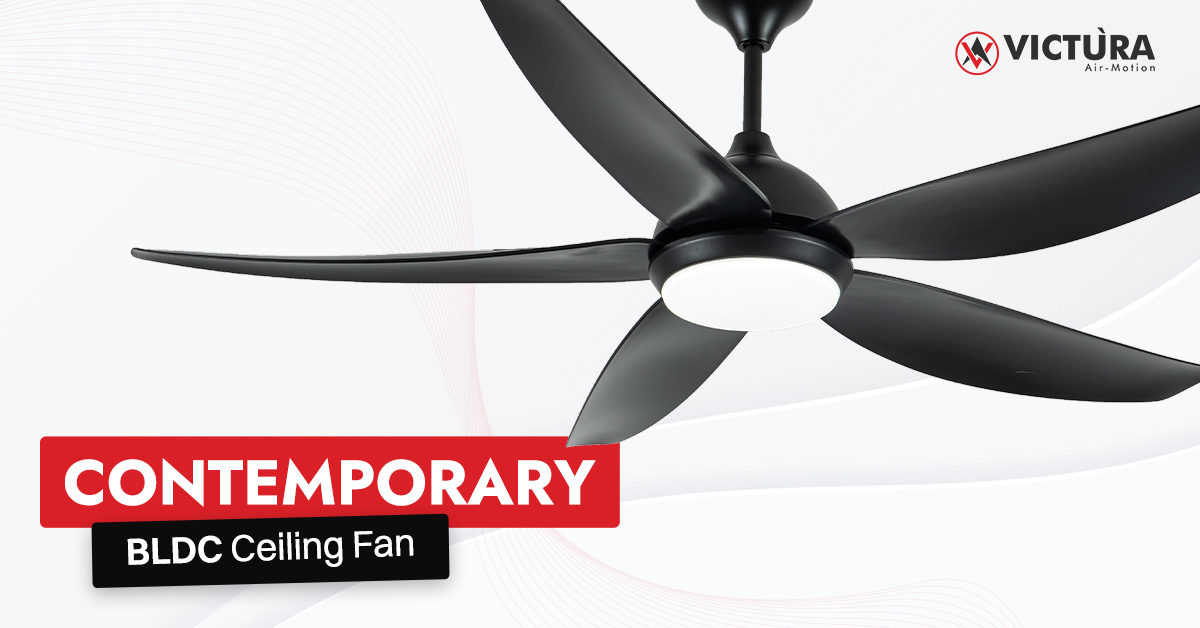
It is the question that every practical person puts forward at the showroom: "What is the reason for paying twice for a fan?"
The first thing that comes to mind is the high price tag which might cause you a shock. But then you compare it to buying an LED bulb against an old filament bulb. The "sticker price" is higher, but the "running cost" is where you win.
In a normal household where the fan operates for most of the day, the BLDC model generally recoups its cost in a bit over a year on account of the reduced electricity bills. It is really a high-interest savings account masquerading as a ceiling fan.
You pay more today at the counter so that you can pay the electricity company every month for the next ten years much less than the charge without the fan.
When you factor in the additional features, such as built-in lights and silent operation, the "premium" starts to appear as if one got a steal.
When you switch over to a BLDC fan, it is not only the heat that you can avoid but you can also get back the serenity and beauty of your home. The time of "dumb" hardware is over and we are now living in a time when even the simplest tools are intelligent and energy-efficient.
These fans are the best example that you can have the style with power, and silence with performance. Besides the big changes on your bill, or the winning of a night's sleep without noise, the adoption of BLDC is not only a trend, but it is the new norm for the modern Indian lifestyle.
So don’t fall behind, adopt better technology for your home by upgrading to modern BLDC ceiling fans like Victura Airmotion!
BLDC is definitely better for a lot of reasons. Firstly, a BLDC is less noisy and reduces power bills by a lot. Regular fans cost little at first yet add to running costs over time.
Absolutely. Running at just one-third the energy of regular fans, these units cut costs straight away. Most households in India cover the higher price within a year and a half. Every rupee after that is basically free income.
Built without internal friction, thanks to brushless motors, they avoid rapid part decay. A well-made model often works smoothly for 12–18 months. Because of their reliability, manufacturers tend to back them with extended coverage, far beyond what traditional units offer.
Warm air tends to rise and get stuck near the ceiling in colder months. When the fan spins backward it shifts the air gently downward instead. The temperature spreads evenly without cold spots lingering below. The space simply feels warmer.
Room size matters when picking one. Blades need space to work properly. A bigger sweep covers more area. Good motor quality, 2-5 years of warranty, easy to repair or replace, all these things matter when choosing a fan.
Fans with BLDC motors might need less fixing, yet their inner circuitry is complex. Not every repair shop can fix it. That’s why you should always take it to a reputable shop.
Keep moving with bright ideas. From the way air moves to clever home hints, our blog is your place to dive into ease, style, and smart energy use.