Fans in gyms run for extended durations. A high performance fan must maintain stable speed even during voltage fluctuations or long operational cycles.
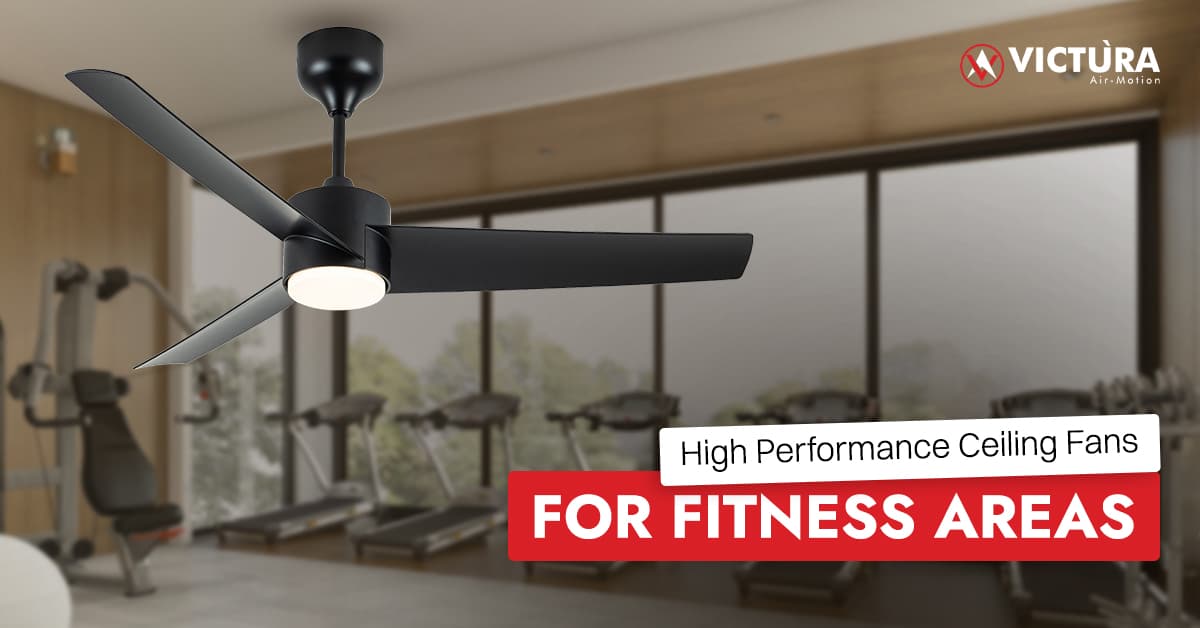
Gyms need High Performance Fans. A fitness space like the gym is built on energy. Music is loud, movements are fast, and bodies generate heat continuously.
The environment here is directly influenced by air circulation. It is responsible for comfort and physical endurance and contributes to the overall quality of the workout.
The selection of the appropriate ceiling fans for gym, studio, and fitness areas is significant for continuous airflow, even temperature, and efficient power consumption for a long time.
This guide explains how to choose high performance fans for fitness areas and why modern BLDC technology, airflow design, and power efficiency matter more than ever.
Heat is always generated in fitness spaces, unlike bedrooms and living rooms. Zones for cardio, free weights, and group workouts are usually full for several hours a day.
One of the consequences of poor air circulation is:
Ceiling fans with high performance will not only circulate a lot of air but also save energy and cost in the working out area by making the air-conditioning system run smoothly and effectively.
Not every ceiling fan is designed for fitness use. High performance fans for gyms are defined by a combination of airflow strength, motor efficiency, stability, and noise control.
Air delivery, which is measured in Cubic Metres per Minute (CMM), is the factor that decides the extent of fan circulation over a wide area. Commercial fitness areas require higher CMM than residential rooms in order to ensure that every corner gets supplied with air, even during the peak of activity.
Fans in gyms run for extended durations. A high performance fan must maintain stable speed even during voltage fluctuations or long operational cycles.
Noise control is critical. A loud motor hum or blade vibration can disrupt the music systems, trainer's instructions, and group sessions. A smooth where silent performance maintains the attention on movement and rhythm.
Brushless Direct Current (BLDC) ceiling fans are modern trends that are becoming more and more common in the design of commercial fitness areas.
Fitness centres operate fans for several hours every day. BLDC fans consume significantly less power than conventional induction motor fans, often using less than half the electricity while delivering strong airflow.
Lower power consumption translates into:
Inconsistent voltage is often an issue in commercial buildings. BLDC fans are made to maintain stable performance during power variations, thus providing constant airflow through the area during exercise sessions.
The brushless structure of BLDC motors has the effect of considerably reducing their wear and tear. They thus become appropriate for places where fan operation is not often terminated.
In fitness areas, blade design impacts both airflow reach and comfort.
A good blade will give airflow that feels like it goes through the whole area and is natural, not harsh or concentrated.
The choice of fan sizes should be determined by both the height of the ceiling and the area of the floor.
Incorrect sizing can result in dead zones or overpowering airflow, both of which reduce workout comfort.
Fitness spaces are acoustically active. Music, instructions, and equipment already generate sound. Fans should not add to the noise load.
High performance BLDC fans are engineered to:
Silent airflow helps maintain focus, especially in group classes, yoga sessions, and guided training zones.
Unplanned power interruptions can disrupt workouts and ventilation. Fans that perform efficiently on inverters or backup power systems offer a significant advantage.
BLDC fans consume minimal wattage, allowing:
This reliability is particularly important for commercial fitness environments.
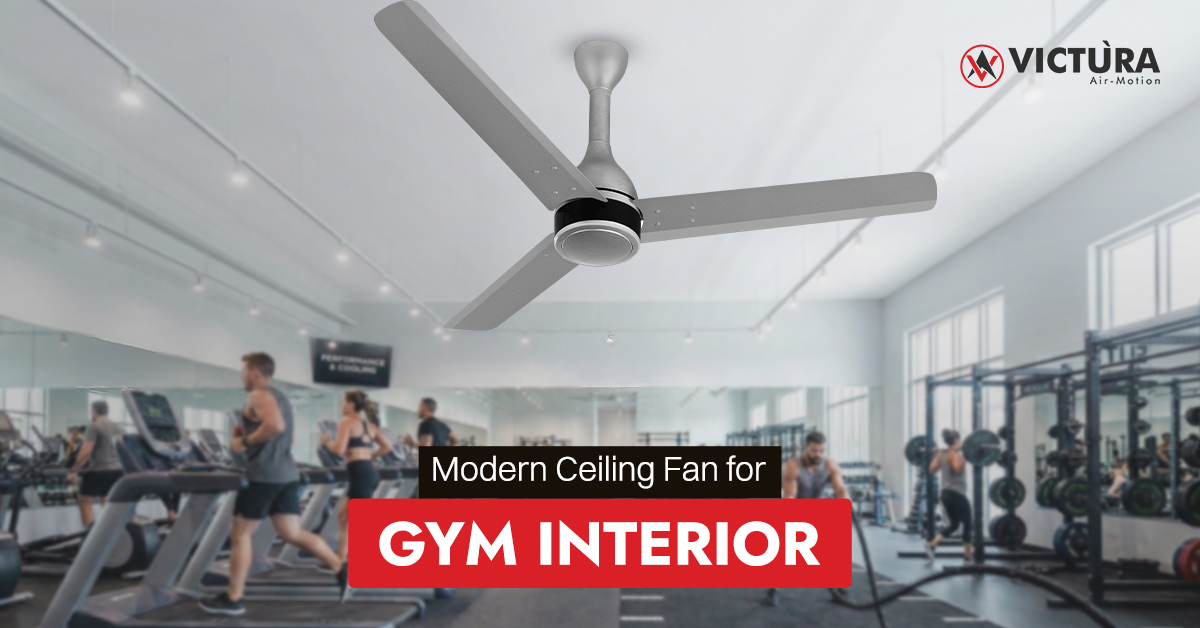
High traffic fitness spaces demand equipment that requires minimal upkeep.
Key features to look for:
Lower maintenance needs reduce downtime and operational disruptions.
Fitness spaces are no longer purely functional. Design and ambience influence member experience.
High performance fans today come in finishes that complement:
A clean, modern fan design integrates seamlessly into the overall interior without drawing unnecessary attention.
Airflow in fitness areas is not merely a comfort add-on; it is an infrastructure part of performance.
The ceiling fan that is installed at the right place helps people to train longer, enhances the quality of the workout and keeps the training environment healthier; thus, it is said to be the right fan.
High Performance BLDC fans are characterised by their efficacy, long-lastingness, and comfort; therefore, they are deemed a necessity for today's fitness spaces.
Careful selection guarantees that each exercise will be cooler, easier, and more lively without extra power usage or noise disturbance. So if you’re looking for affordable High Performance Fans, check out Victura Airmotion fans!
Fans meant for gyms need strong airflow, measured in cubic meters per minute (CMM). Running without hiccups through busy days matters just as much. Noise should stay out of people's way, quiet enough to ignore. Using less electricity adds up over time. Built tough, they must handle constant spinning. Pairing smoothly with emergency power helps when outlets fail.
Focus on air delivery, not just RPM. Blade shape matters too, so go for aerodynamic ones. A modern motor such as a BLDC type, helps maintain steady performance. The movement of air stays even when spreading far across rooms.
What matters is how smoothly it moves air across the room. Look past just RPM when picking a fan. Even at lower speeds, a design that balances blade shape and spacing helps spread airflow more fully. Some models work smarter, not harder, by guiding wind where it's needed without more rotations.
A breeze of modern design kicks things off, brushless DC motors push air harder while sipping less juice. These ceiling fans hum softly where older models roar, slicing through resistance without draining watts as the older models did.
Yes. 400 RPM moves plenty of air when its blades are shaped right. Smooth running counts too. Efficiency shows up in steady airflow, not numbers on a label.
A well-sized ceiling fan (1200mm, usually) can make a space feel cooler by moving lots of air quietly. When the motor uses less power but still delivers strong airflow. Matching the blade span to your room dimensions ensures even circulation without strain. Good performance comes from how these elements work together behind the scenes.
Keep moving with bright ideas. From the way air moves to clever home hints, our blog is your place to dive into ease, style, and smart energy use.