When you prioritize a UL damp rating, pick materials like ABS plastic that can actually survive the humidity, and opt for a high-performance DC motor, you aren't just buying an appliance.
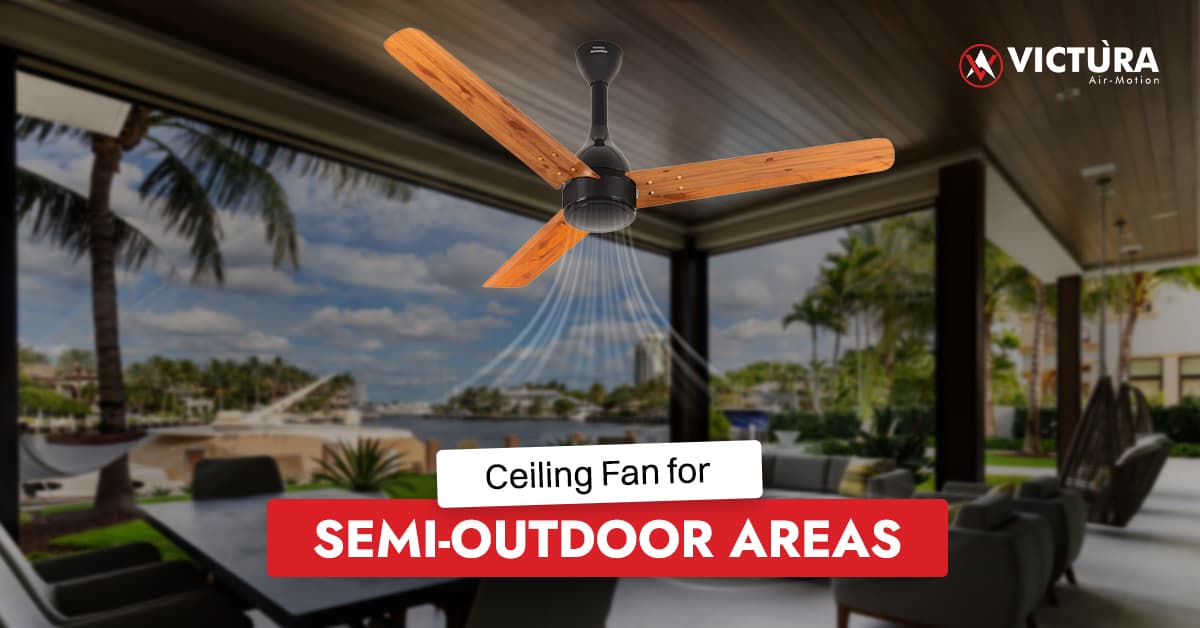
Choosing the right ceiling fan for open spaces is necessary as heat continues to rise. It’s a way to take full advantage of your semi-outdoor areas without having to sit in a pool of sweat.
That’s the reality of picking the wrong fan for a semi-outdoor space in India. These "in-between" zones (your balconies, verandas, and open-air courtyards) are brutal on standard appliances. Between the bone-deep humidity of the monsoon and the relentless summer dust, a normal indoor fan simply doesn't stand a chance.
Here is exactly what you need to look for so your outdoor retreat actually stays a retreat.
Don't ignore the UL rating. In India, where monsoon rain often blows sideways into balconies, it’s the difference between a fan that lasts a decade and one that becomes a short-circuit risk by next July.
Manufacturers aren't just being picky; they’re telling you how much moisture the internal motor can handle before it turns into a block of rusted metal.
Damp-rated fans are the MVPs of the Indian veranda. They are built specifically to live in high-humidity environments without the motor seizing up. They handle the heavy, damp air of a July thunderstorm with total ease.
Just remember: "damp" doesn't mean "waterproof." If rain hits your fan directly because your balcony is completely open, you need a "Wet-Rated" model.
A single season outside can wreck an ordinary indoor fan. Blowing air in summer might seem fine at first, yet dampness creeps into places it should never reach.
Metal parts turn brittle, wires weaken, while salt-heavy breezes chew through insulation slowly. The motor housing cracks when hit by sudden downpours too often. What works inside fails fast beyond four walls.
In a cozy bedroom, natural wood blades look sophisticated. Outside? They’re a liability. When wood comes into contact with water through rain or moisture, it swells up. So if your fan blades are made of wood, they won’t work properly.
Go for high-grade ABS plastic instead. It sounds less "natural," but modern designs look incredible—many even mimic wood grain so well you’d have to climb a ladder to tell the difference.
ABS is basically immune to humidity and heat. It’s made for enduring the harshest weather (like the Indian climate). Due to its material, you can expect little to no damage. It has a dust-proof coating as well.
Aluminium is also a solid choice. It’s lightweight, blends well with modern aesthetics and is great for cooling.
If you live in Mumbai, Chennai, Kolkata, or any coastal city, the air isn't just damp—it’s corrosive. That salt air acts like sandpaper on metal. A standard outdoor fan might survive years in Bengaluru or Delhi, but it could be dead in months on a beachfront balcony.
The fix? A marine-grade rating. These fans are the tanks of the industry. They use specialized coatings that salt simply can't penetrate. If the motor housing starts "pitting" or looking like it has tiny bubbles under the paint, the salt has already won.
Do yourself a favor and splurge on the marine-grade protection upfront. It saves the headache of replacing the whole unit every couple of years.
People sit outside to connect with nature. An old ceiling fan whirring kind of ruins that. This is why you should avoid buying old fan models now. These use Alternating Current (an outdated technology) for their motor which makes a lot of noise and not to mention, eats up your power bill.
Buy Direct Current fans instead. DC motors are tiny powerhouses. They work quietly with the least power consumption. DC motor fan models can stay cool even after running all day, and they use about 65% less electricity.
That efficiency is a lifesaver in India, especially since DC fans are much friendlier to home inverters. They run longer during power cuts without draining the battery. You need a high CMM (Cubic Metres per Minute) rating to actually feel a breeze when there are no walls to trap the air.
A DC motor gives you that raw power without making your sit-out sound like a construction site.
Getting up to switch off the fan while you’re mid-conversation is honestly such a mood-killer. Remote controls make things so much easier. Being able to control the speed while you’re doing your work or just relaxing and not having to get up is the epitome of comfort.
It’s not just for show; it’s practical. You can start saving power with LEDs as soon as the sun goes down. LEDs don’t put out heat, which means they won't turn your fan into a giant magnet for every insect in the neighborhood.
A tiny fan on a big veranda is useless. It’s like trying to cool a desert with a hand fan. For most Indian spaces, a 48-inch to 52-inch span is the standard.
Still, if you have a large, sprawling area, even the standard sizing might fall short. Go for higher, 56 or even 60 inches.
These extra large fans move slowly but give you more air, giving you a gentle, natural breath rather than a localized wind that blows your journals down.
Choosing a fan for your veranda is about taking back your outdoor space from the heat. When you prioritize a UL damp rating, pick materials like ABS plastic that can actually survive the humidity, and opt for a high-performance DC motor, you aren't just buying an appliance.
You’re buying a comfortable Sunday afternoon. So don’t just go for the first fan that you see. Think hard about what you want first, then look into the top options. And feel free to check out Victura Airmotion fans while you’re at it too!
Outside heat turns patios into ovens come June. That spinning thing overhead? It stirs hot stillness into something bearable. Movement tricks the skin into feeling cooler. Bugs hate breezy spots too, so they stay elsewhere. Simple physics keeps folks lingering past sunset.
Outside spaces need special fans. Not every model handles weather well. Models marked "Damp" or "Wet" are built for open air spaces. Regular ones aren’t made to face rain or humidity. Sealed parts and tough blades keep outdoor units running.
For an outdoor patio ceiling fan, the best size would be 48 inches, assuming it’s a regular 10 by 10 balcony. But if the area is larger, it’ll need a larger fan, say 56 inches, or maybe two smaller fans.
Moisture stays out because the motor is tightly sealed. Rust does not form on parts made from stainless steel. Materials such as ABS plastic ensure blades hold their shape. These traits define what turns a fan into an outdoor model.
Humidity bends the blades fast because of the outdoor air effects. A few weeks, maybe less. Inside fans aren’t built for wet air. Metal parts inside start to corrode over time. Once rust sets in, moving stops. That can lead to dangerous wiring issues. Using one outside might work at first, just not for long.
Start by confirming the UL tag. Go for damp or wet if outside. Blades made of ABS plastic tend to last, just like aluminum ones do. When storms knock out power, a DC motor running on inverter backup makes sense. Efficiency matters most when heat rolls in.
Keep moving with bright ideas. From the way air moves to clever home hints, our blog is your place to dive into ease, style, and smart energy use.